
Lake County Family Law Attorney
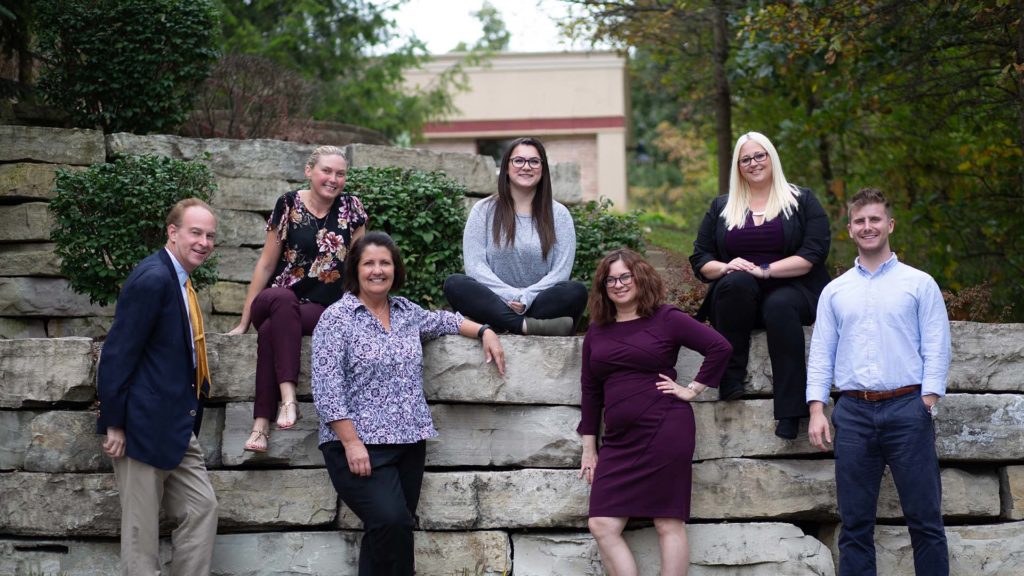
Our attorneys handle family law cases across Lake County, from straightforward divorces to fully contested custody disputes, at every stage from filing through post-judgment enforcement. Lake County cases are local in ways general legal guidance rarely accounts for, and the judges, docket practices, and procedural expectations at the 19th Judicial Circuit shape how every case moves.
Whether you need a family lawyer Lake County residents rely on for a straightforward divorce or a Lake County divorce and custody lawyer for a fully contested dispute, our attorneys handle it from start to finish.
The Law Offices of Lawrence S. Manassa, P.C., handles the full range of family law matters for clients across Lake County, including divorce, allocation of parental responsibilities, child support, spousal maintenance, and post-judgment enforcement.
Our Barrington office is positioned at the southwest corner of Lake County, and our attorneys appear regularly at the 19th Judicial Circuit Courthouse in Waukegan. Call 847-221-5511 to talk through your family law matter and what to expect at the 19th Judicial Circuit.
What Family Law Services Does the Firm Offer in Lake County?
Our practice covers the core issues that arise when families go through separation, divorce, or post-judgment disputes. These include divorce and legal separation, allocation of parental responsibilities and parenting time, child support, spousal maintenance, prenuptial agreements, enforcement of existing orders, and parentage matters.
Some of these overlap in a single case. A divorce involving children typically requires resolving both financial support and parenting arrangements before the court enters a final judgment. Our Lake County family law attorneys handle all of it within the same case rather than referring pieces out.
We also assist clients who are already past their original divorce judgment and need to modify an existing order or enforce one that isn’t being followed. Post-judgment matters are a significant part of our Lake County practice, since the circumstances families face often change after an initial order is entered.
Several of our attorneys hold backgrounds in psychology, which shapes how we approach high-conflict cases and how we help clients make decisions during the most stressful periods of a case. Our firm works alongside financial professionals and divorce coaches when a case calls for it, not just attorneys.
Does the Firm Handle Both Simple and Complex Lake County Divorce Cases?
Yes. Some clients come to us with an uncontested matter where both spouses broadly agree and need help getting the paperwork structured correctly. Others are in the middle of a high-conflict dispute involving business assets, retirement accounts, or a custody situation that requires a guardian ad litem.
We handle both, and how a case gets approached depends on what it actually requires, not a one-size framework applied to every client.
What Communities Does the Firm Serve in Lake County?
Our office represents clients throughout Lake County, including Barrington, Gurnee, Vernon Hills, Libertyville, Mundelein, Wauconda, Highland Park, Waukegan, and the surrounding communities.
As a divorce attorney Lake County families have worked with for matters filed in Waukegan, our attorneys appear regularly at the 19th Judicial Circuit Courthouse and understand how the court manages its family law docket, including scheduling practices and how contested matters move toward trial.
Call 847-221-5511 to discuss your situation and find out what to expect based on your community and your specific circumstances.
How Illinois Handles Divorce in Lake County
Illinois recognizes only one ground for divorce: irreconcilable differences, under 750 ILCS 5/401. The case focuses on practical outcomes rather than fault, which means property division, parenting arrangements, and support are the issues the court actually resolves.
Illinois courts divide marital property equitably rather than automatically splitting it 50/50. Equitable doesn’t always mean equal. The court weighs factors including the length of the marriage, each spouse’s contributions, and the economic circumstances each spouse will face after the divorce.
The distinction between marital and non-marital property becomes particularly important in longer marriages or cases where one spouse owned significant assets before the relationship began.
Non-marital property, including pre-marital assets and inheritances received individually, generally stays with the spouse who owns it. The lines can blur when assets have been commingled over the years, which is when property classification becomes a contested issue.
How Long Do Lake County Divorce Cases Typically Take?
The timeline depends heavily on whether the case is contested. An uncontested divorce with full agreement on all terms can be resolved in a matter of months once the court’s schedule allows for a final hearing.
Contested cases in Lake County’s 19th Judicial Circuit typically take longer, with case management conferences, discovery, and sometimes mediation built into the schedule before a trial date is set.
Does the Firm Handle Collaborative Divorce in Lake County?
Yes. Collaborative divorce keeps both spouses and their attorneys working toward a negotiated settlement outside of court, often with the help of a neutral financial professional or divorce coach.
It works best when both spouses are willing to engage honestly with financial disclosure and parenting discussions, and when the goal is a durable agreement rather than a courtroom outcome.
For clients in Barrington, Vernon Hills, and Libertyville who want to avoid contested litigation, collaborative divorce is worth discussing early in the process.
Call 847-221-5511 to find out whether a collaborative approach fits your circumstances.
Does Illinois Require Mediation Before a Divorce Trial in Lake County?
Not automatically statewide, though individual judges in Lake County’s family law division may order mediation on specific issues before allowing a matter to proceed to trial. Mediation is most commonly ordered on parenting disputes rather than financial ones.
If a case involves both financial and parenting disagreements, the court may address them on separate tracks, resolving the custody-related issues through mediation while the financial disputes continue through the litigation process.
Allocation of Parental Responsibilities and Parenting Time in Lake County
In Lake County, what used to be called custody is now split into two separate decisions: allocation of parental responsibilities, meaning decision-making authority under 750 ILCS 5/602.5, and parenting time, the schedule of when the child is with each parent under 750 ILCS 5/602.7. Courts decide these separately, though parties often negotiate them together.
Parental responsibilities cover decision-making authority for significant areas of a child’s life, including education, healthcare, religion, and extracurricular activities. The court can allocate these jointly or assign them to one parent depending on the family’s circumstances and history.
What Standard Does the 19th Judicial Circuit Use for Parenting Decisions?
The controlling standard is the child’s best interests. Courts apply this standard through a list of statutory factors that include each parent’s relationship with the child, the child’s adjustment to home and school, and each parent’s willingness to support the other parent’s relationship with the child.
Judges in Lake County weigh these factors case by case. How they prioritize specific factors varies based on the child’s age, each parent’s work schedule, and the history of the relationship between the parents and child.
What Happens When Parents Can’t Agree on a Parenting Schedule?
When parents can’t reach an agreement on parenting time, the court decides based on the statutory factors and any evidence presented at the hearing. This may involve testimony from both parents, school, and medical records, and in some cases a guardian ad litem’s investigation and recommendation.
A contested parenting dispute in Lake County typically adds time to a case’s overall timeline, since the court needs adequate information before entering a final parenting order that affects a child’s daily life.
Call 847-221-5511 to speak with our office about parenting disputes in Lake County.
Child Support and Spousal Maintenance in Illinois
Child support in Illinois uses an income shares model, which accounts for both parents’ net incomes and the parenting time split. Both parents’ earnings factor into the calculation, not only the paying parent’s.
Adjustments to the guideline amount are possible when a child has extraordinary medical expenses, work-related childcare costs, or specific needs that fall outside the standard formula. Courts can deviate from the guideline when strict application would be inappropriate given a family’s actual circumstances.
Spousal maintenance depends on the length of the marriage, each spouse’s income, and the standard of living established during the marriage. Illinois applies a statutory formula to maintenance calculations unless the parties agree to different terms.
The length of maintenance payments follows a separate statutory formula tied to the length of the marriage. Longer marriages typically produce longer award periods, while shorter marriages rarely result in extended obligations.
Either spouse can petition to modify or terminate a maintenance award if financial circumstances change substantially after the divorce is finalized.
Call 847-221-5511 to discuss how child support or maintenance would apply to your Lake County case.
Can Child Support Be Modified After the Divorce Is Final?
Yes. Either parent can petition to modify child support when there has been a substantial change in circumstances, such as a significant income change or a shift in the parenting schedule. The court applies the current statutory formula to the updated financial picture rather than simply adjusting the old order.
Modifications to parenting time are also possible after a divorce is final. The standard depends on how much time has passed since the original order and the nature of the change being requested.
Generally, the court requires a showing that the modification serves the child’s best interests and that circumstances have materially changed since the original order was entered.
What Happens If a Support Order Isn’t Being Followed?
Illinois courts have enforcement tools available when a party fails to comply with a support order, including income withholding, contempt proceedings, and, in some cases, license suspension. A parent who isn’t receiving court-ordered support doesn’t need to wait through extended delays before bringing the matter back before the judge.
The same applies to parenting time violations. When one parent consistently withholds court-ordered parenting time, Illinois law provides remedies including make-up time and, in serious cases, a modification of the existing order. Our office handles both the initial support determination and post-judgment enforcement for Lake County clients.
Lake County Family Law Questions Answered by Our Barrington Attorneys
Does it matter that your office is in Barrington rather than Waukegan?
No. Our attorneys appear regularly at the 19th Judicial Circuit Courthouse in Waukegan, which is where all Lake County family law cases are filed and heard. Barrington sits in the southwest corner of Lake County, making it a practical base for clients throughout the county.
Can I file for divorce in Lake County if my spouse lives in a different county?
Illinois requires one spouse to have lived in the state for 90 days before filing. If you meet that residency requirement and live in Lake County, you generally file there regardless of where your spouse resides. Specific jurisdictional questions are worth discussing with an attorney before filing.
Do I need a family law attorney if my spouse and I agree on everything?
Having an attorney is still worth considering even in an uncontested case. A settlement agreement that misses key terms, fails to address a retirement account correctly, or doesn’t properly incorporate a parenting plan can create problems that are costly to fix after the judgment is entered.
How does a prenuptial agreement affect a Lake County divorce?
A valid prenuptial agreement in Illinois can predetermine how marital property is divided and whether maintenance applies. Courts review these agreements for procedural validity, including whether both parties had independent counsel and full financial disclosure at the time of signing.
What is parentage, and when does it come up in a Lake County family law case?
Parentage establishes legal parent-child relationships for children born outside of marriage. Once parentage is established, the court can enter orders for parenting time, decision-making authority, and child support on the same basis as a divorce case. Parentage matters are handled through the same 19th Judicial Circuit family law division.
Get Answers From Our Lake County Family Law Attorneys
Family law cases in Lake County touch on some of the most consequential decisions people make: where children live, how finances are divided, and what the years ahead will look like.
Our Barrington office is positioned to handle matters throughout the county, and our attorneys appear regularly before the 19th Judicial Circuit judges who will decide your case. We work with clients at every stage, from the first conversation about whether to file through post-judgment enforcement years later.
Call 847-221-5511 or visit our contact page to schedule a consultation and get specific answers based on your Lake County circumstances.